Buy hecke.eu ?
We are moving the project
hecke.eu .
Are you interested in purchasing the domain
hecke.eu ?
domain@kv-gmbh.de · 0541-91531010
Buy hecke.eu ?
'Will + participle 2?'
"Will + participle 2" is a construction used to form the future perfect tense in English. It is used to indicate an action that will be completed before a specific point in the future. This construction is formed by using the auxiliary verb "will" followed by the past participle of the main verb. For example, "By the time you arrive, I will have finished my homework." **
What are the Latin forms of the present participle, perfect passive participle, and future active participle?
The Latin present participle is formed by adding -ns, -ntis to the present stem of the verb. For example, the present participle of the verb "amo" (I love) is "amans, amantis" (loving). The perfect passive participle is formed by adding -us, -a, -um to the verb stem. For example, the perfect passive participle of the verb "amo" is "amatus, amata, amatum" (loved). The future active participle is formed by adding -urus, -ura, -urum to the verb stem. For example, the future active participle of the verb "amo" is "amaturus, amatura, amaturum" (about to love). **
Similar search terms for Participle
Top-Angebote
Products related to Participle:
-
Condor werkzeug 1006 SocketOutput end (profile): Female Torx; Material: Chrome Vanadium Steel; Number of tools: 12; Square Drive Tang Size [mm (inch)]: 6.3 (1/4), 10 (3/8); Packaging width [cm]: 9,80; Packaging length [cm]: 30,80; Packaging height [cm]: 3,3016,99 £*Shipping: 8,45 £Secure redirect to the provider
-
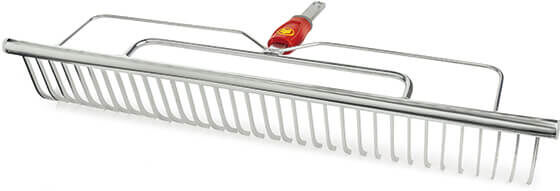
Wolf Garten Multi-Change Longspan RakeThe Wolf Garten Multi-Change Longspan Rake is ideal for using in larger gardens for gathering large quantities of clippings, leaves and grass. The tines are specially designed to glide over the surface of the lawn to avoid damage to the grass. Designed to be used with your choice of handle (sold separately) with a simple push of the button and a gentle click. Made in Germany and complete with a 35 year manufacturers guarantee. Dimensions: 25(H) x 58(W) x 12(L)cm.53,99 £*Shipping: 0,00 £Secure redirect to the provider
-
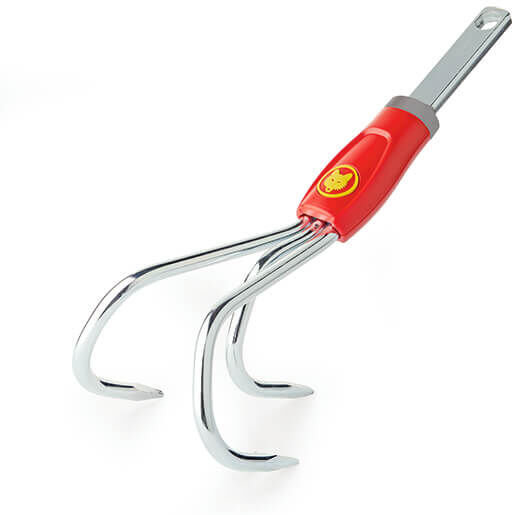
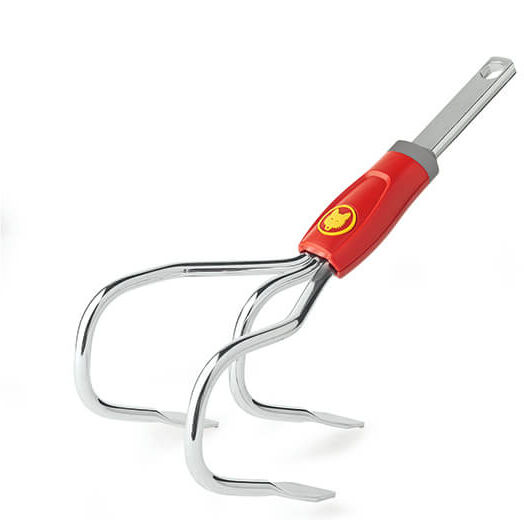
Wolf Garten Multi-Change 11cm CultivatorThe Wolf Garten Multi-Change Cultivator 11cm features 3 lance shaped prongs making it easy to break up medium soil to improve water distribution and improve nutrients for cultivating plants. The backwards angle of the prongs allows them to glide through soil with minimum effort with back or muscle strain. Designed to be used (sold separately) with your choice of handle with a simple push of the button and a gentle click. Made in Germany and complete with a 35 year manufacturers guarantee. Dimensions: 25(H) x 11(W) x 9(L)cm.22,49 £*Shipping: 3,50 £Secure redirect to the provider

-
What are participle clauses?
Participle clauses are a type of clause that uses a present participle (-ing form) or a past participle (-ed form) to provide additional information about the subject of the main clause. They can be used to show simultaneous actions, cause and effect, or to provide descriptive details. For example, in the sentence "Feeling tired, she decided to go to bed," the participle clause "Feeling tired" provides additional information about the subject "she." **
-
What is a participle?
A participle is a form of a verb that can function as an adjective or be part of a verb phrase. There are two types of participles in English: the present participle, which ends in -ing (e.g. "walking"), and the past participle, which can end in -ed, -en, -d, -t, -n, or -ne (e.g. "broken"). Participles are used to modify nouns or pronouns, and they can also be used to form verb tenses such as the present perfect or past perfect. **
-
What is the difference between the past participle and the present participle?
The past participle is a verb form used to indicate a completed action or state that occurred in the past. It is often used with auxiliary verbs to form the perfect tenses (e.g., "has eaten," "had gone"). The present participle, on the other hand, is a verb form used to indicate an ongoing action or state in the present or future. It is formed by adding "-ing" to the base form of the verb and is used to create the progressive tenses (e.g., "is eating," "will be going"). **
-
How can the terms premature, simultaneous, and subsequent be explained in relation to past participle, present participle, and future participle?
The terms premature, simultaneous, and subsequent can be explained in relation to past participle, present participle, and future participle based on their timing in relation to the action of the verb. The past participle refers to an action that has already been completed, making it premature in relation to the present moment. The present participle refers to an action that is happening at the same time as something else, making it simultaneous. The future participle refers to an action that will happen at a later time, making it subsequent to the present moment. These terms help to clarify the timing of the action in relation to the verb. **
What is a nominalized participle?
A nominalized participle is a verb form that has been turned into a noun. This is done by adding a suffix to the participle form of the verb, which allows it to function as a noun in a sentence. Nominalized participles are commonly used in various languages to express actions or qualities in a more abstract or general way. **
What is a substantivized participle?
A substantivized participle is a verb form that has been turned into a noun by adding a definite article and declining it for case, gender, and number. In other words, it is a participle that has been transformed into a noun and can function as a subject, object, or complement in a sentence. This process allows the participle to take on the characteristics of a noun while still retaining some of its verbal qualities. **
Top-Angebote
Products related to Participle:
-
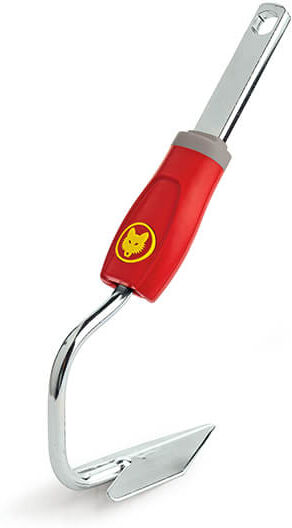
Wolf Garten Multi-Change GrubberThe Wolf Garten Multi-Change Grubber features 3 pointed tines making it easy to break up heavy soil and stony areas when gardening at home. Great for aerating soil ahead of planting or working soil between crops and plants in beds or borders. The 3 heavy duty angled tines help to reduce strain when gardening and is self sharpening, especially ideal on stony ground. Designed to be used (sold separately) with your choice of handle with a simple push of the button and a gentle click. Made in Germany and complete with a 35 year manufacturers guarantee. Dimensions: 25(H) x 9(W) x 9(L)cm.17,99 £*Shipping: 3,50 £Secure redirect to the provider
-
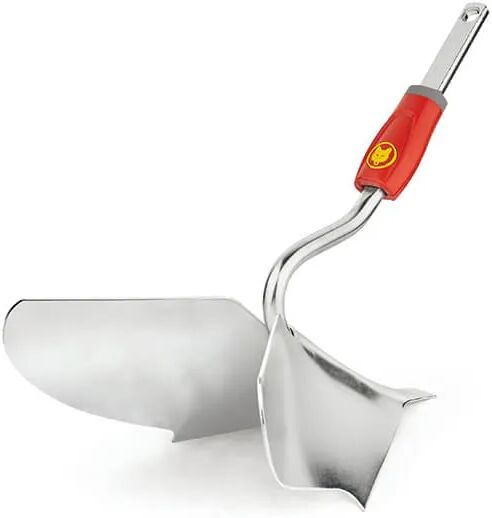
Wolf Garten Multi-Change RidgerThe Wolf Garten Multi-Change Ridger is a wide edge tool that can create 20cm wide furrows in the soil, ideal for planting larger items like potatoes. The sharp end helps to achieve deep furrows with minimal effort but with producing consistent results. Designed to be used with your choice of handle (sold separately) with a simple push of the button and a gentle click. Made in Germany and complete with a 35 year manufacturers guarantee. Dimensions: 40(H) x 20(W) x 25(L)cm.29,69 £*Shipping: 3,50 £Secure redirect to the provider
-
Condor werkzeug 1006 SocketOutput end (profile): Female Torx; Material: Chrome Vanadium Steel; Number of tools: 12; Square Drive Tang Size [mm (inch)]: 6.3 (1/4), 10 (3/8); Packaging width [cm]: 9,80; Packaging length [cm]: 30,80; Packaging height [cm]: 3,3016,99 £*Shipping: 8,45 £Secure redirect to the provider
-
'Will + participle 2?'
"Will + participle 2" is a construction used to form the future perfect tense in English. It is used to indicate an action that will be completed before a specific point in the future. This construction is formed by using the auxiliary verb "will" followed by the past participle of the main verb. For example, "By the time you arrive, I will have finished my homework." **
-
What are the Latin forms of the present participle, perfect passive participle, and future active participle?
The Latin present participle is formed by adding -ns, -ntis to the present stem of the verb. For example, the present participle of the verb "amo" (I love) is "amans, amantis" (loving). The perfect passive participle is formed by adding -us, -a, -um to the verb stem. For example, the perfect passive participle of the verb "amo" is "amatus, amata, amatum" (loved). The future active participle is formed by adding -urus, -ura, -urum to the verb stem. For example, the future active participle of the verb "amo" is "amaturus, amatura, amaturum" (about to love). **
-
What are participle clauses?
Participle clauses are a type of clause that uses a present participle (-ing form) or a past participle (-ed form) to provide additional information about the subject of the main clause. They can be used to show simultaneous actions, cause and effect, or to provide descriptive details. For example, in the sentence "Feeling tired, she decided to go to bed," the participle clause "Feeling tired" provides additional information about the subject "she." **
-
What is a participle?
A participle is a form of a verb that can function as an adjective or be part of a verb phrase. There are two types of participles in English: the present participle, which ends in -ing (e.g. "walking"), and the past participle, which can end in -ed, -en, -d, -t, -n, or -ne (e.g. "broken"). Participles are used to modify nouns or pronouns, and they can also be used to form verb tenses such as the present perfect or past perfect. **
Similar search terms for Participle
-
Wolf Garten Multi-Change Longspan RakeThe Wolf Garten Multi-Change Longspan Rake is ideal for using in larger gardens for gathering large quantities of clippings, leaves and grass. The tines are specially designed to glide over the surface of the lawn to avoid damage to the grass. Designed to be used with your choice of handle (sold separately) with a simple push of the button and a gentle click. Made in Germany and complete with a 35 year manufacturers guarantee. Dimensions: 25(H) x 58(W) x 12(L)cm.53,99 £*Shipping: 0,00 £Secure redirect to the provider
-
Wolf Garten Multi-Change 11cm CultivatorThe Wolf Garten Multi-Change Cultivator 11cm features 3 lance shaped prongs making it easy to break up medium soil to improve water distribution and improve nutrients for cultivating plants. The backwards angle of the prongs allows them to glide through soil with minimum effort with back or muscle strain. Designed to be used (sold separately) with your choice of handle with a simple push of the button and a gentle click. Made in Germany and complete with a 35 year manufacturers guarantee. Dimensions: 25(H) x 11(W) x 9(L)cm.22,49 £*Shipping: 3,50 £Secure redirect to the provider
-
Wolf Garten Multi-Change 3.5cm AeratorThe Wolf Garten Multi-Change Aerator 3.5cm is ideal for gardening in narrow beds or confined spaces allow optimum nutrient distribution. The shape and design of the narrow head makes it useful for drawing through the soil with ease to avoid back or muscle strain. Designed to be used (sold separately) with your choice of handle with a simple push of the button and a gentle click. Made in Germany and complete with a 35 year manufacturers guarantee. Dimensions: 25(H) x 3.5(W) x 9(L)cm.17,99 £*Shipping: 3,50 £Secure redirect to the provider
-
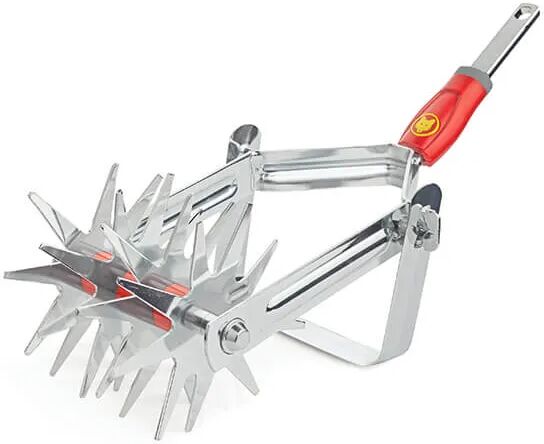
Wolf Garten Multi-Change Soil MillerThe Wolf Garten Multi-Change Soil Miller is suitable for breaking up soil into fine tilth, removing weeds and preparing your earth before planting and sowing seeds. This essential tool also helps to mix peat, manure or fertiliser into the soil with little effort. The rear blade provides stability whilst you work, making it ideal for larger areas. Designed to be used with your choice of handle (sold separately) with a simple push of the button and a gentle click. Made in Germany and complete with a 35 year manufacturers guarantee. Dimensions: 25(H) x 15(W) x 12(L)cm.52,19 £*Shipping: 0,00 £Secure redirect to the provider
-
What is the difference between the past participle and the present participle?
The past participle is a verb form used to indicate a completed action or state that occurred in the past. It is often used with auxiliary verbs to form the perfect tenses (e.g., "has eaten," "had gone"). The present participle, on the other hand, is a verb form used to indicate an ongoing action or state in the present or future. It is formed by adding "-ing" to the base form of the verb and is used to create the progressive tenses (e.g., "is eating," "will be going"). **
-
How can the terms premature, simultaneous, and subsequent be explained in relation to past participle, present participle, and future participle?
The terms premature, simultaneous, and subsequent can be explained in relation to past participle, present participle, and future participle based on their timing in relation to the action of the verb. The past participle refers to an action that has already been completed, making it premature in relation to the present moment. The present participle refers to an action that is happening at the same time as something else, making it simultaneous. The future participle refers to an action that will happen at a later time, making it subsequent to the present moment. These terms help to clarify the timing of the action in relation to the verb. **
-
What is a nominalized participle?
A nominalized participle is a verb form that has been turned into a noun. This is done by adding a suffix to the participle form of the verb, which allows it to function as a noun in a sentence. Nominalized participles are commonly used in various languages to express actions or qualities in a more abstract or general way. **
-
What is a substantivized participle?
A substantivized participle is a verb form that has been turned into a noun by adding a definite article and declining it for case, gender, and number. In other words, it is a participle that has been transformed into a noun and can function as a subject, object, or complement in a sentence. This process allows the participle to take on the characteristics of a noun while still retaining some of its verbal qualities. **
* All prices are inclusive of VAT and, if applicable, plus shipping costs. The offer information is based on the details provided by the respective shop and is updated through automated processes. Real-time updates do not occur, so deviations can occur in individual cases. ** Note: Parts of this content were created by AI.