Buy hecke.eu ?
We are moving the project
hecke.eu .
Are you interested in purchasing the domain
hecke.eu ?
domain@kv-gmbh.de · 0541-91531010
Buy hecke.eu ?
Is the mRNA vaccine safe?
Yes, the mRNA vaccines have been shown to be safe and effective in clinical trials and real-world use. The vaccines have undergone rigorous testing and have been authorized for emergency use by regulatory agencies such as the FDA and the European Medicines Agency. Millions of people have received the mRNA vaccines with only rare and mostly mild side effects reported. The benefits of vaccination in preventing severe illness and death from COVID-19 far outweigh the potential risks. **
How does mRNA maturation occur?
mRNA maturation occurs through a process called RNA processing. This process involves several steps, including capping, splicing, and polyadenylation. First, a 5' cap is added to the beginning of the mRNA molecule to protect it and help it bind to the ribosome. Then, introns (non-coding regions) are removed through a process called splicing, and the remaining exons (coding regions) are joined together. Finally, a poly-A tail is added to the end of the mRNA molecule to help stabilize it and regulate its translation. These steps ensure that the mRNA molecule is properly processed and ready for translation into protein. **
Similar search terms for Mrna
Top-Angebote
Products related to Mrna:
-
Condor werkzeug 1006 SocketOutput end (profile): Female Torx; Material: Chrome Vanadium Steel; Number of tools: 12; Square Drive Tang Size [mm (inch)]: 6.3 (1/4), 10 (3/8); Packaging width [cm]: 9,80; Packaging length [cm]: 30,80; Packaging height [cm]: 3,3016,99 £*Shipping: 8,45 £Secure redirect to the provider
-
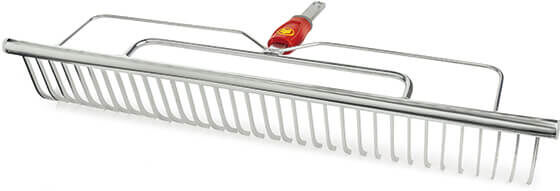
Wolf Garten Multi-Change Longspan RakeThe Wolf Garten Multi-Change Longspan Rake is ideal for using in larger gardens for gathering large quantities of clippings, leaves and grass. The tines are specially designed to glide over the surface of the lawn to avoid damage to the grass. Designed to be used with your choice of handle (sold separately) with a simple push of the button and a gentle click. Made in Germany and complete with a 35 year manufacturers guarantee. Dimensions: 25(H) x 58(W) x 12(L)cm.53,99 £*Shipping: 0,00 £Secure redirect to the provider


-
What is mRNA in food?
mRNA in food refers to the presence of messenger RNA molecules that are naturally occurring in the cells of plants and animals that we consume as food. mRNA is a type of RNA that carries genetic information from the DNA in a cell's nucleus to the ribosomes, where it is used to produce proteins. In the context of food, mRNA is not a cause for concern as it is a normal component of the cells in the food we eat and is broken down during digestion without any known harmful effects. **
-
Is mRNA the same as RNA?
mRNA (messenger RNA) is a type of RNA (ribonucleic acid). RNA is a broad category that includes several types of molecules involved in various cellular processes, including mRNA, tRNA (transfer RNA), and rRNA (ribosomal RNA). mRNA specifically carries the genetic information from the DNA in the cell's nucleus to the ribosomes, where it is used as a template for protein synthesis. Therefore, while mRNA is a type of RNA, not all RNA molecules are mRNA. **
-
How can one transcribe DNA into mRNA?
Transcribing DNA into mRNA involves the process of transcription, which takes place in the nucleus of a cell. During transcription, the enzyme RNA polymerase binds to a specific region of the DNA called the promoter and unwinds the DNA double helix. It then uses one strand of the DNA as a template to synthesize a complementary mRNA strand by adding nucleotides according to the base-pairing rules (A with U, T with A, C with G, and G with C). Once the mRNA strand is synthesized, it is processed and then transported out of the nucleus into the cytoplasm for translation into a protein. **
-
How can DNA be translated into mRNA?
DNA is transcribed into mRNA through a process called transcription. During transcription, the DNA double helix unwinds and an enzyme called RNA polymerase binds to a specific region of the DNA called the promoter. The RNA polymerase then reads the DNA sequence and synthesizes a complementary mRNA strand by adding nucleotides one by one. This process continues until the RNA polymerase reaches a termination signal, at which point the newly synthesized mRNA is released. This mRNA molecule can then be translated into a protein by the ribosomes. **

How long is the lifespan of mRNA?
The lifespan of mRNA can vary depending on the specific mRNA molecule and the cellular conditions. In general, the average lifespan of mRNA in a eukaryotic cell is around 10 hours, but some mRNA molecules can be very short-lived, lasting only a few minutes, while others can be more stable and persist for several days. The stability of mRNA is influenced by factors such as the presence of specific sequences in the mRNA molecule, the activity of RNA-binding proteins, and the cellular environment. **
How does the maturation of mRNA occur?
The maturation of mRNA involves several steps. First, the pre-mRNA is processed by removing the non-coding regions, called introns, and joining the coding regions, called exons, through a process called splicing. Then, a 5' cap and a 3' poly-A tail are added to the mRNA to protect it from degradation and facilitate its export from the nucleus. Finally, the mature mRNA is ready to be translated into a protein by the ribosomes in the cytoplasm. This process ensures that only the necessary coding information is present in the mature mRNA for protein synthesis. **
Top-Angebote
Products related to Mrna:
-
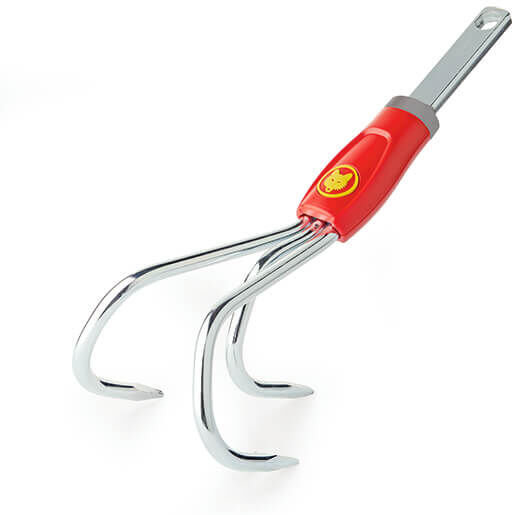
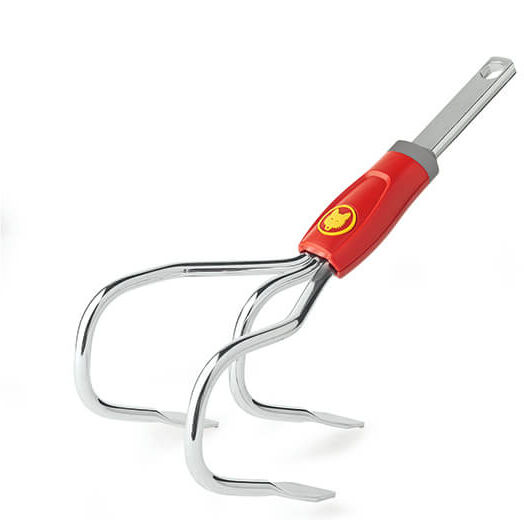
Wolf Garten Multi-Change GrubberThe Wolf Garten Multi-Change Grubber features 3 pointed tines making it easy to break up heavy soil and stony areas when gardening at home. Great for aerating soil ahead of planting or working soil between crops and plants in beds or borders. The 3 heavy duty angled tines help to reduce strain when gardening and is self sharpening, especially ideal on stony ground. Designed to be used (sold separately) with your choice of handle with a simple push of the button and a gentle click. Made in Germany and complete with a 35 year manufacturers guarantee. Dimensions: 25(H) x 9(W) x 9(L)cm.17,99 £*Shipping: 3,50 £Secure redirect to the provider
-
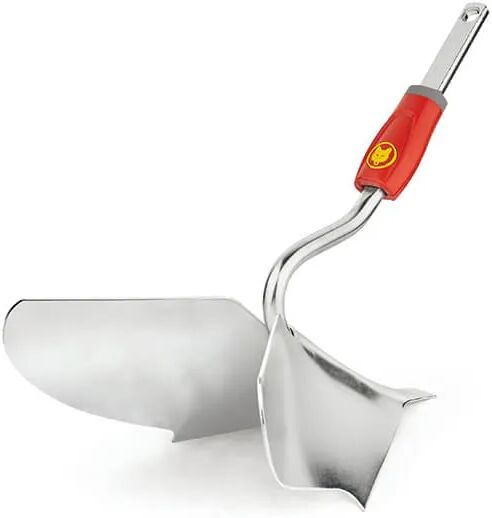
Wolf Garten Multi-Change RidgerThe Wolf Garten Multi-Change Ridger is a wide edge tool that can create 20cm wide furrows in the soil, ideal for planting larger items like potatoes. The sharp end helps to achieve deep furrows with minimal effort but with producing consistent results. Designed to be used with your choice of handle (sold separately) with a simple push of the button and a gentle click. Made in Germany and complete with a 35 year manufacturers guarantee. Dimensions: 40(H) x 20(W) x 25(L)cm.29,69 £*Shipping: 3,50 £Secure redirect to the provider
-
Condor werkzeug 1006 SocketOutput end (profile): Female Torx; Material: Chrome Vanadium Steel; Number of tools: 12; Square Drive Tang Size [mm (inch)]: 6.3 (1/4), 10 (3/8); Packaging width [cm]: 9,80; Packaging length [cm]: 30,80; Packaging height [cm]: 3,3016,99 £*Shipping: 8,45 £Secure redirect to the provider
-
Is the mRNA vaccine safe?
Yes, the mRNA vaccines have been shown to be safe and effective in clinical trials and real-world use. The vaccines have undergone rigorous testing and have been authorized for emergency use by regulatory agencies such as the FDA and the European Medicines Agency. Millions of people have received the mRNA vaccines with only rare and mostly mild side effects reported. The benefits of vaccination in preventing severe illness and death from COVID-19 far outweigh the potential risks. **
-
How does mRNA maturation occur?
mRNA maturation occurs through a process called RNA processing. This process involves several steps, including capping, splicing, and polyadenylation. First, a 5' cap is added to the beginning of the mRNA molecule to protect it and help it bind to the ribosome. Then, introns (non-coding regions) are removed through a process called splicing, and the remaining exons (coding regions) are joined together. Finally, a poly-A tail is added to the end of the mRNA molecule to help stabilize it and regulate its translation. These steps ensure that the mRNA molecule is properly processed and ready for translation into protein. **
-
What is mRNA in food?
mRNA in food refers to the presence of messenger RNA molecules that are naturally occurring in the cells of plants and animals that we consume as food. mRNA is a type of RNA that carries genetic information from the DNA in a cell's nucleus to the ribosomes, where it is used to produce proteins. In the context of food, mRNA is not a cause for concern as it is a normal component of the cells in the food we eat and is broken down during digestion without any known harmful effects. **
-
Is mRNA the same as RNA?
mRNA (messenger RNA) is a type of RNA (ribonucleic acid). RNA is a broad category that includes several types of molecules involved in various cellular processes, including mRNA, tRNA (transfer RNA), and rRNA (ribosomal RNA). mRNA specifically carries the genetic information from the DNA in the cell's nucleus to the ribosomes, where it is used as a template for protein synthesis. Therefore, while mRNA is a type of RNA, not all RNA molecules are mRNA. **
Similar search terms for Mrna
-
Wolf Garten Multi-Change Longspan RakeThe Wolf Garten Multi-Change Longspan Rake is ideal for using in larger gardens for gathering large quantities of clippings, leaves and grass. The tines are specially designed to glide over the surface of the lawn to avoid damage to the grass. Designed to be used with your choice of handle (sold separately) with a simple push of the button and a gentle click. Made in Germany and complete with a 35 year manufacturers guarantee. Dimensions: 25(H) x 58(W) x 12(L)cm.53,99 £*Shipping: 0,00 £Secure redirect to the provider
-
Wolf Garten Multi-Change 11cm CultivatorThe Wolf Garten Multi-Change Cultivator 11cm features 3 lance shaped prongs making it easy to break up medium soil to improve water distribution and improve nutrients for cultivating plants. The backwards angle of the prongs allows them to glide through soil with minimum effort with back or muscle strain. Designed to be used (sold separately) with your choice of handle with a simple push of the button and a gentle click. Made in Germany and complete with a 35 year manufacturers guarantee. Dimensions: 25(H) x 11(W) x 9(L)cm.22,49 £*Shipping: 3,50 £Secure redirect to the provider
-
Wolf Garten Multi-Change 3.5cm AeratorThe Wolf Garten Multi-Change Aerator 3.5cm is ideal for gardening in narrow beds or confined spaces allow optimum nutrient distribution. The shape and design of the narrow head makes it useful for drawing through the soil with ease to avoid back or muscle strain. Designed to be used (sold separately) with your choice of handle with a simple push of the button and a gentle click. Made in Germany and complete with a 35 year manufacturers guarantee. Dimensions: 25(H) x 3.5(W) x 9(L)cm.17,99 £*Shipping: 3,50 £Secure redirect to the provider
-
How can one transcribe DNA into mRNA?
Transcribing DNA into mRNA involves the process of transcription, which takes place in the nucleus of a cell. During transcription, the enzyme RNA polymerase binds to a specific region of the DNA called the promoter and unwinds the DNA double helix. It then uses one strand of the DNA as a template to synthesize a complementary mRNA strand by adding nucleotides according to the base-pairing rules (A with U, T with A, C with G, and G with C). Once the mRNA strand is synthesized, it is processed and then transported out of the nucleus into the cytoplasm for translation into a protein. **
-
How can DNA be translated into mRNA?
DNA is transcribed into mRNA through a process called transcription. During transcription, the DNA double helix unwinds and an enzyme called RNA polymerase binds to a specific region of the DNA called the promoter. The RNA polymerase then reads the DNA sequence and synthesizes a complementary mRNA strand by adding nucleotides one by one. This process continues until the RNA polymerase reaches a termination signal, at which point the newly synthesized mRNA is released. This mRNA molecule can then be translated into a protein by the ribosomes. **
-
How long is the lifespan of mRNA?
The lifespan of mRNA can vary depending on the specific mRNA molecule and the cellular conditions. In general, the average lifespan of mRNA in a eukaryotic cell is around 10 hours, but some mRNA molecules can be very short-lived, lasting only a few minutes, while others can be more stable and persist for several days. The stability of mRNA is influenced by factors such as the presence of specific sequences in the mRNA molecule, the activity of RNA-binding proteins, and the cellular environment. **
-
How does the maturation of mRNA occur?
The maturation of mRNA involves several steps. First, the pre-mRNA is processed by removing the non-coding regions, called introns, and joining the coding regions, called exons, through a process called splicing. Then, a 5' cap and a 3' poly-A tail are added to the mRNA to protect it from degradation and facilitate its export from the nucleus. Finally, the mature mRNA is ready to be translated into a protein by the ribosomes in the cytoplasm. This process ensures that only the necessary coding information is present in the mature mRNA for protein synthesis. **
* All prices are inclusive of VAT and, if applicable, plus shipping costs. The offer information is based on the details provided by the respective shop and is updated through automated processes. Real-time updates do not occur, so deviations can occur in individual cases. ** Note: Parts of this content were created by AI.